
I’m obsessed with brain health.
Why?
Because your brain is your most important asset.
And it’s easy to forget that your brain is a physical organ, like your heart or liver. As such, it is impacted by your physical health.
But it’s more than just that.
Your brain is by far the most complex organ in your body. So of course it’s highly sensitive to changing inputs. It’s the most sensitive organ in your body to fluctuations in physical health, both good and bad.
In fact, the human brain is the most complex object in the known universe.1 So being a “health nut” about your brain isn’t crazy at all.

Sleep
Of all the organs in your body, your brain requires the most daily maintenance.
When you sleep, your neurons shrink, and cerebrospinal fluid flushes out the metabolic byproducts of the day, literally cleaning house. If you don’t get enough sleep or poor quality sleep, you don’t get a good brain flush, and you’ll feel like crap.2,3 That’s why I don’t eat before bed.
Getting enough sleep isn’t just important, it’s essential, so dial in your nighttime routine and make getting to bed on time a priority. Dim the lights, get away from screens, and avoid stimulating activities.
Nutrition
Pound for pound, your brain uses the most energy, consuming 20% of your daily calories despite being only 2% of your body weight.4 And it really wants a steady supply of fuel – the sort you would get from eating a low-glycemic diet. When you eat sugary foods and processed carbs, your blood sugar spikes and then drops. You feel this crash first and foremost in your brain as reduced willpower and focus, along with more negative emotions.5

Also, to be a high-performance organ, your brain needs high-quality fuel. Not just calories, but micro-nutrients and Omega-3s. So eat your veggies and berries. (If you’re too busy/lazy to grocery shop and food prep, try these.) Processed food, sugar, and alcohol are all basically poison for your brain. They probably won’t kill you, but they will reduce your brainpower both in the short run and the long run.6
Exercise
Exercise immediately improves the flow of blood to your brain, bringing it nutrients and oxygen, leading to better brain function today. That’s why exercise gives you a 12-hour mood boost,7 increases your attention span, enhances your intelligence, and elevates your creativity.8 So get a workout every morning; even a small one gives you a noticeable brain boost.
Regular exercise improves your cardiovascular health, leading to better blood flow to your brain in general, leading to better brain function in the long run. So if you want to stave off dementia and stay sharp as you age, develop a habit of moving your body.9

Breathing
You don’t need me to tell you to breathe, but you might need a reminder about how to breathe. And the fact that you would die if you went a few minutes without oxygen speaks to how important it is.
It’s far better to breathe through your nose, so if you’re a mouth-breather, change your ways. Nose breathing leads to better oxygen uptake and lower blood pressure.10 I’ve learned to nose breathe all the time, even during exercise. I even tape my mouth shut at night to ensure I breathe properly while sleeping.
If you snore or have sleep apnea, you need to get that sorted out. Given how important sleep is for your brain, if you’re starving your brain of oxygen every night, there’s no way you’re functioning at your best.
Lastly, pausing your day to just sit and breathe is also an excellent way to recover from stress. Yes it’s boring. But that’s good for you.11 Use the little moments of downtime your day offers you for micro doses of mindfulness. I know it’s hard to put down your phone (it’s hard for me too), but you won’t regret it.

Regular meditation is also incredibly beneficial. It’s focus training, boredom training, and stress recovery all wrapped in one.
Make your brain your best friend.
Sleep, exercise, nutrition, breathing. Get these things right, and your brain will be your best friend.
Get them wrong, and everything is harder. Less focus and willpower. Reduced creativity and intelligence. More anxiety and anger. Less contentment and joy.
Odds are, you’ve been living with some aspects of the abysmal state I just described. And you’ve come to think of it as normal and inevitable.
It’s not.
You can do better. You can become better.
If you become obsessed with brain health, you can kick-start an upward spiral that makes your whole life easier.
1Kelly, Nicholas J., et al. “The brain is the most complicated object in the universe. This is the story of scientists’ quest to decode it – and read people’s minds.” The Conversation. February 7, 2024.
2Oakley, Barbara. A Mind for Numbers: How to Excel at Math and Science (Even If You Flunked Algebra). Penguin, 2014.
3Gundry, Steven R., MD. The Longevity Paradox: How to Die Young at a Ripe Old Age. Harper Wave 2019.
4Raichle, Marcus E, and Debra A Gusnard. “Appraising the brain’s energy budget.” Proceedings of the National Academy of Sciences of the United States of America vol. 99,16 (2002): 10237-9. doi:10.1073/pnas.172399499
5Loper, Chris. “Sugar Brain.” Northwest Educational Services. July 31, 2017.
6Loper, Chris. “Brain Food.” Northwest Educational Services. August 26, 2019.
7Sibold, Jeremy S, and Kathleen M Berg. “Mood enhancement persists for up to 12 hours following aerobic exercise: a pilot study.” Perceptual and motor skills vol. 111,2 (2010): 333-42. doi:10.2466/02.06.13.15.PMS.111.5.333-342
8Dutta, Tania. “How Exercise Boosts Your Creativity, Concentration, and Focus.” Zeel. March 2, 2024.
9“Small Amounts of Moderate to Vigorous Physical Activity Are Associated with Big Reductions in Dementia Risk.” Johns Hopkins. February 20, 2025.
10McKeown, Patrick. The Oxygen Advantage: Simple, Scientifically Proven Breathing Techniques to Help You Become Healthier, Slimmer, Faster and Fitter. William Morrow Paperbacks, 2016.
11Brooks, Arthur C. “You Need to Be Bored. Here’s Why.” Harvard Business Review. August 28, 2025.
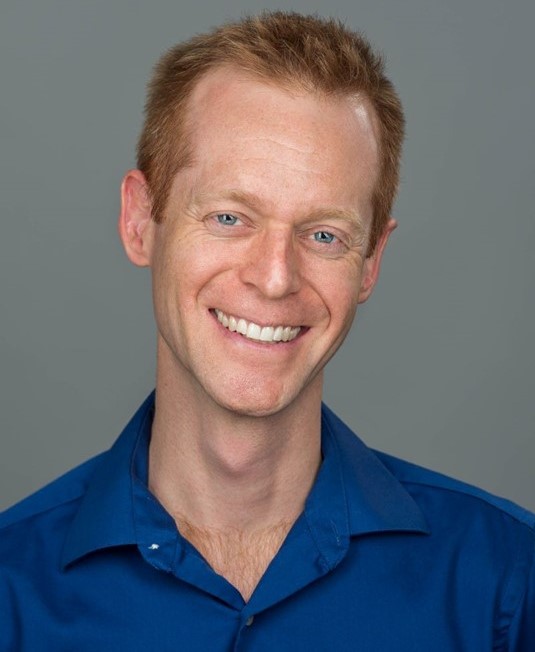
Chris Loper has been writing about self-improvement and helping busy adults with habit formation since 2017.
He also writes an education blog for parents and students for Northwest Educational Services.
Along with Greg Smith, Chris is the cocreator of Parenting for Academic Success, a series of transformative classes that create empowered parents, confident students, and harmonious families.
His most recent endeavor combines his academic and habit-formation expertise to help students thrive in college. Visit SmartCollegeHabits.com to learn more.
In 2021, Chris published a humorous memoir titled Wood Floats and Other Brilliant Observations, a book that blends crazy stories with practical life lessons.
He lives in Issaquah, WA where he is the owner of South Cove Tutoring.