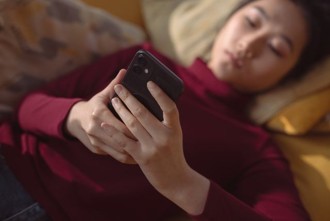
I’ve written before that taking any dip into the shallows before attempting deep work makes it much harder to sit down, focus, and get into flow. And while that is certainly true, I’ve come to realize that not all “shallows” are created equal. Some are much worse than others.
What I mean by the shallows are things like the following:
- Texting
- Busywork
- YouTube
- Social Media
- Games on Your Phone
None of these activities are inherently bad. Some, like the first three on that list, are regularly necessary. We call them the shallows because they don’t require deep engagement. You can dip in and out of these activities with ease. If you get distracted while performing a task in the shallows, it’s no big deal, because you weren’t devoting much brain power to the task in the first place.
The challenge every knowledge worker and would-be creative has is avoiding the shallows as much as possible until they have done the important and difficult cognitive work of the day. That’s because the shallows all have one thing in common: they make it harder for your brain to focus.

But it’s a mistake to lump all shallow activities together and treat them as equal. So there are two questions we should ask ourselves about the shallows we’re drawn toward.
Is it necessary?
First, we should sort them into two categories: necessary and unnecessary. The necessary are what Cal Newport calls “shallow work” – the emails, scheduling, meetings, text responses, and so on that you must do to remain a functioning member of your company, friend group, or family.1 The unnecessary are what I’ve taken to calling “shallow fun” – scrolling social media, doing puzzles on my phone, watching YouTube videos, and so on.
Shallow work can’t be eliminated, so it should be corralled as much as possible into time blocks that occur after you’ve done your deep work for the day. Standard guidelines include not checking email before noon and keeping your phone in airplane mode during deep work time blocks.
Shallow fun, on the other hand, can be eliminated, or at least dramatically reduced. Certainly, shallow fun should be avoided until your deep work is complete, and ideally, until your shallow work is complete too. The real reason I’m inclined to reduce shallow fun in my life, however, is that it takes time away from deep fun – the activities I get the most enjoyment out of, my hobbies, my passions.
How harmful is it?
This second question is perhaps more important. Some shallow activities are more detrimental to your ability to focus than others. Consider the following:
- A group meeting vs. A group text chain
- Replying to emails vs. Reading the headlines on Google News
- Watching YouTube vs. Watching 30-second videos on TikTok, Instagram Reels, or YouTube Shorts
In each of those examples, the latter is more disruptive to your focus and has a more detrimental effect on your attention span. Pay attention to your own experience in various types of shallows and what effect they have on you. You might discover that some are basically harmless, while others are effectively kryptonite.
While it would be ideal to live a life where you never dipped into the shallows, we all know that’s unrealistic. But we can still take steps to improve how much the shallows impact our productivity and well-being. And recognizing that not all shallows are created equal is a good place to start.
1Newport, Cal. Deep Work (Rules for Focused Success in a Distracted World). Grand Central Publishing, 2016.
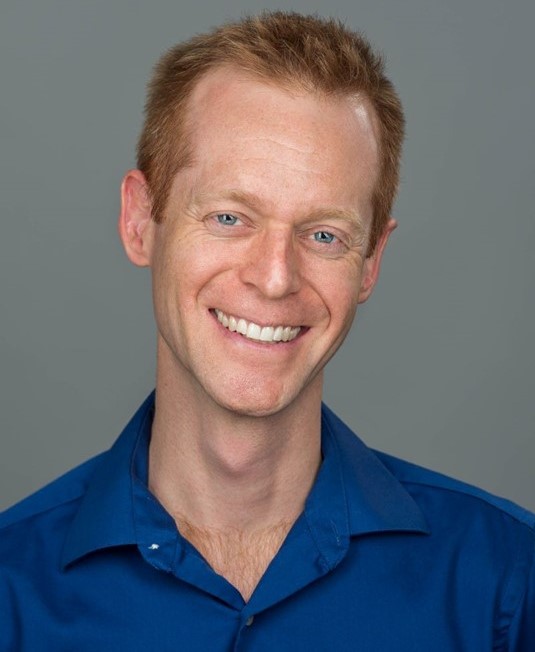
Chris Loper has been writing about self-improvement and helping busy adults with habit formation since 2017.
He also writes an education blog for parents and students for Northwest Educational Services.
Along with Greg Smith, Chris is the cocreator of Parenting for Academic Success, a series of transformative classes that create empowered parents, confident students, and harmonious families.
His most recent endeavor combines his academic and habit-formation expertise to help students thrive in college. Visit SmartCollegeHabits.com to learn more.
In 2021, Chris published a humorous memoir titled Wood Floats and Other Brilliant Observations, a book that blends crazy stories with practical life lessons.
He lives in Issaquah, WA where he is the owner of South Cove Tutoring.