
Everything you do is controlled by your brain.
Muscle memory? Nope. That’s brain memory. Like all memories, it’s stored in your brain as a neural pathway – a connection between neurons.
The first time you learn something – whether it’s how to throw a frisbee or the square root of 49 – your brain forms a new neural connection. It literally grows a tiny filament between two or more neurons to encode the memory.
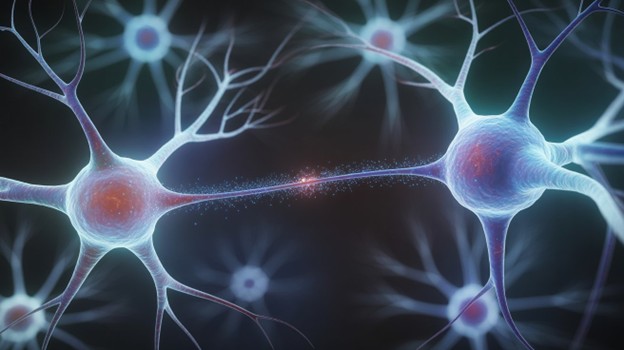
At first, that filament is thin and flimsy. It’s at risk of being lost. If you don’t revisit the new memory soon, your brain will discard it, dissolving that neural connection.
But if you repeatedly come back to the memory by using that information again and again, you’ll strengthen the neural connection. The filament will grow thicker and thereby become more resilient.1
Habits are no different, as Orison Swett Marden observed long before we understood the neuroscience:
“The beginning of a habit is like an invisible thread, but every time we repeat the act, we strengthen the strand, add to it another filament, until it becomes a great cable and binds us irrevocably in thought and act.”2
So the key to habit formation is repetition.
At first, the habit is easily lost because the neural connection is so flimsy. So you really have to commit to doing it every single day. That’s one of the reasons 100% commitment is so powerful.

Being consistent about the time, place, and method you perform the habit also strengthens the habit because it ensures you’re reinforcing the exact same neural pathway.3
Ideally, you’ll never miss a day. But keep in mind that it’s easier to recover from missing a day after the habit has been established (which may take several months). Missing a day at the beginning, however, is likely to be catastrophic, causing the habit to fall apart as the neural connection is lost. So do everything you can to avoid missing a day at the beginning.
But if it does happen, don’t beat yourself up. Recommit and begin again.
P.S. It’s that time of year when most people are thinking about changing their habits. If you’d like personalized guidance, reach out for a free habit coaching consultation.
1Doidge, Norman. The Brain That Changes Itself. Penguin Books, 2006.
2“You’re Probably Right.” Farnam Street. No. 647. September 21, 2025.
3Loper, Chris. “Bushwhacking Your Way to New Habits.” Becoming Better. January 2, 2023.
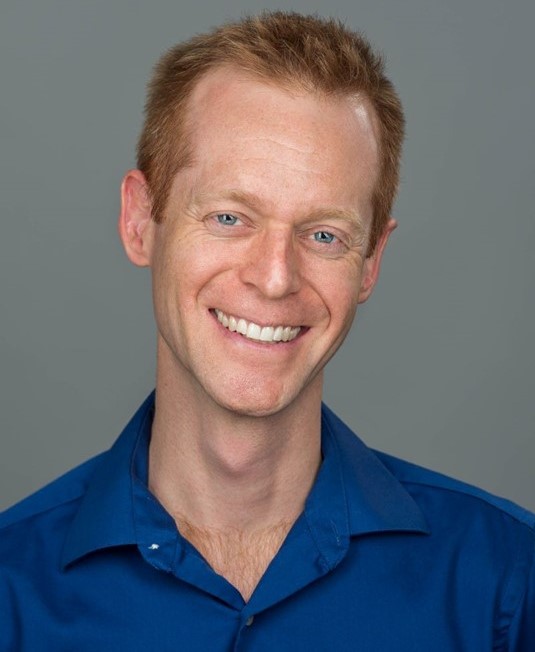
Chris Loper has been writing about self-improvement and helping busy adults with habit formation since 2017.
He also writes an education blog for parents and students for Northwest Educational Services.
Along with Greg Smith, Chris is the cocreator of Parenting for Academic Success, a series of transformative classes that create empowered parents, confident students, and harmonious families.
His most recent endeavor combines his academic and habit-formation expertise to help students thrive in college. Visit SmartCollegeHabits.com to learn more.
In 2021, Chris published a humorous memoir titled Wood Floats and Other Brilliant Observations, a book that blends crazy stories with practical life lessons.
He lives in Issaquah, WA where he is the owner of South Cove Tutoring.