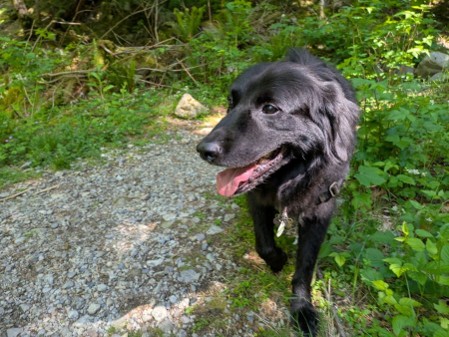
This is Sammy.
He belongs to my dad’s friend Dan. Sammy is simultaneously the friendliest and most well-behaved dog I’ve ever known. I came to love Sammy despite spending my whole life as, frankly, not a dog person.
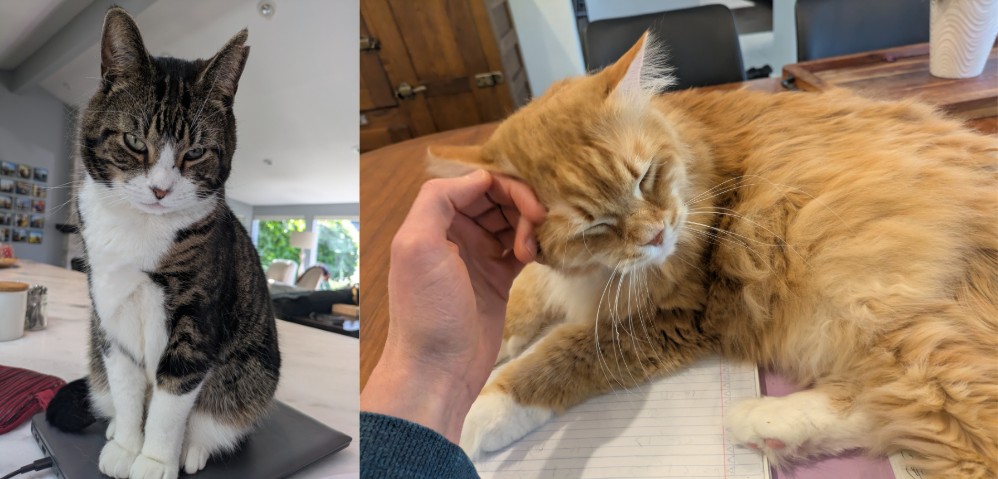
I’ve always been a cat person. Cats make sense to me, and we have a natural affinity for one another. I’m the kind of person who befriends random cats that I see while I’m walking around the neighborhood. Cats like me, and I like them.
The dogs I interacted with growing up were mostly … not great. My aunt Cindy had a nice dog, but the other dogs I knew were aggressive – always barking and biting at you. They were stinky. They left dog poop about that you might step in. Later, I met a lot of dogs who were too friendly – always jumping on you and licking you. I was not a fan.
About five years ago, I transitioned from working in a tutoring office to working with students in their homes. Many of my students have dogs, so in-home tutoring presented me with a choice: have a bad experience whenever I interact with a student’s dog or learn to like dogs. I chose the latter.
First, I had to learn how to interact with dogs. I had no idea how to do it correctly, so I watched some YouTube videos and observed how dog people interacted with dogs. Then, I practiced focusing on the good parts of a dog – their (usually) happy demeanor, their soft fur, etc. This helped me tolerate the parts I still don’t like – the barking, jumping, and licking.
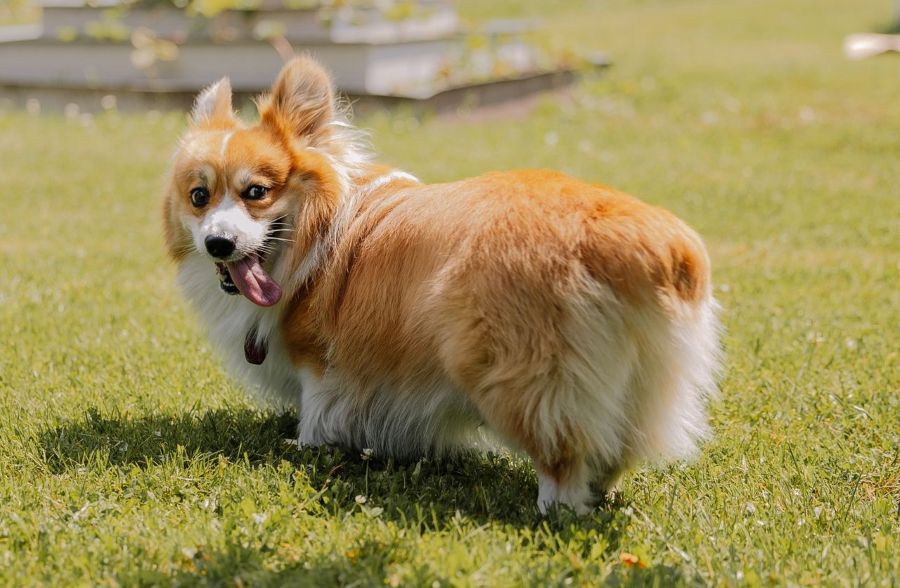
Now I eagerly interact with dogs at students’ homes and while out on walks. (I especially look forward to seeing my neighbor’s young Corgi.) Much to my surprise, I’ve become a dog person. The following example will show you how far I’ve come.
One of my students has a huge dog that is, by all appearances, pretty scary. It’s the size of a wolfhound, and it barks loudly each time I arrive. In fact, it jumps onto the couch in their small living room and barks angrily in my face as I walk by. This was a nerve-wracking experience for me until I learned that she wasn’t angry at all; she was just asking for attention. So now I give her what she wants: a big hug and some pets. That gets her to stop barking and calm down.
The point of this story is not that you should like dogs. The point of this story is that it’s possible to learn to like something that you don’t naturally like. Liking or disliking something feels out of your control, but sometimes it’s actually a choice. And if you can choose to like something, why wouldn’t you?
Now, I’m not suggesting that you make an effort to appreciate litter or enjoy sexual harassment. Some things are simply bad. I’m talking about matters of taste where, in choosing to like something, you improve your experience of the world.
Perhaps there is something or someone you have to encounter on a daily basis that you’re inclined to dislike. Can you find some likeable aspects to focus on?
Perhaps there’s a hobby, music genre, or TV series that your partner wants to share with you, but which is not to your taste. Can you learn to enjoy it?

“If you choose not to find joy in the snow, you will have less joy in your life but still the same amount of snow.”1
When you’re new to birdwatching, the species that gets you excited to continue birding is called your “spark bird.” (For me, it was the bufflehead.) When I was thinking about this blog post, I realized that my journey to liking dogs started with Sammy. He is my “spark dog.”
So if you’re going to learn to like something that’s not easy for you to enjoy, seek out your spark – your entry-point into liking the thing. You might never find it, and that’s okay. But, like a rare species of bird, you’re far more likely to find it if you actively look for it.
1https://jamesclear.com/3-2-1/june-18-2026

Chris Loper has been writing about self-improvement and helping busy adults with habit formation since 2017.
He also writes an education blog for parents and students for Northwest Educational Services.
Along with Greg Smith, Chris is the cocreator of Parenting for Academic Success, a series of transformative classes that create empowered parents, confident students, and harmonious families.
His most recent endeavor combines his academic and habit-formation expertise to help students thrive in college. Visit SmartCollegeHabits.com to learn more.
In 2021, Chris published a humorous memoir titled Wood Floats and Other Brilliant Observations, a book that blends crazy stories with practical life lessons.
He lives in Issaquah, WA where he is the owner of South Cove Tutoring.