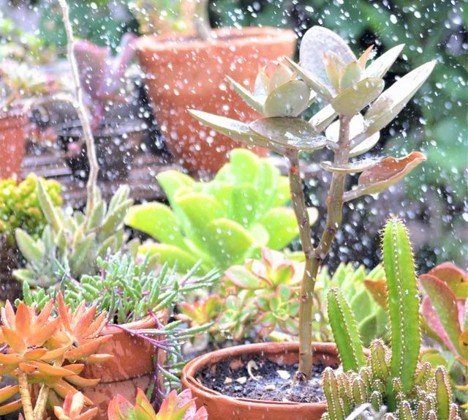
“Our brains have not evolved for this world of plenty. As Dr. Tom Finucane … said, ‘We are cacti in the rain forest.’ And like cacti adapted to an arid climate, we are drowning in dopamine.”1
I’ve killed more houseplants by overwatering than by underwatering. Many plants aren’t evolved to receive very much water: snake plants, succulents, cacti. Keep that in mind because you are one of those plants, and the “water” you get too much of is pleasure:
- Sugary drinks and desserts
- Salty-fatty snacks
- Stimulating entertainment via digital media
These pleasurable inputs tap into human nature by giving us a concentrated dose of something that would have been rare and valuable for our ancestors. The only sugar hunter-gatherers had access to was fruit. Salt and fat are rare in nature. Simulating entertainment would have only come from tribal performances during cultural rituals.
That’s why we’re inclined to overindulge in these now-abundant pleasures. They feel good, at least in the short term. But we’d be wise to consider the long-term problems brought by this lifestyle.
The consequences for our bodies of overindulgence are obvious: obesity, diabetes, and heart disease are epidemic. However, I’m more interested in the consequences for our brains. As I’ve noted before, indulgence makes you less happy because, as Dr. Anna Lembke puts it in Dopamine Nation, “With prolonged and repeated exposure to pleasurable stimuli, our capacity to tolerate pain decreases, and our threshold for experiencing pleasure increases.”1
In other words, too much pleasure makes it easier for us to suffer and harder for us to feel satisfied. We simply weren’t made to have such easy access to dopamine.

The modern world offers a rainforest’s worth of pleasure, but we evolved in a desert. We’re struggling because we’re overwatered.
When you feel like you’re not thriving, like something is off, the standard response to that feeling is to add something, to seek something else, something more. But like a houseplant that’s been given too much water, the solution is to consume less.
Try reducing your inputs. It might be exactly what your brain needs.
1Lembke, Anna, MD. Dopamine Nation: Finding Balance in the Age of Indulgence. Dutton, 2021.
Chris Loper has been writing about self-improvement and helping busy adults with habit formation since 2017.
He also writes an education blog for parents and students for Northwest Educational Services.
Along with Greg Smith, Chris is the cocreator of Parenting for Academic Success, a series of transformative classes that create empowered parents, confident students, and harmonious families.
His most recent endeavor combines his academic and habit-formation expertise to help students thrive in college. Visit SmartCollegeHabits.com to learn more.
In 2021, Chris published a humorous memoir titled Wood Floats and Other Brilliant Observations, a book that blends crazy stories with practical life lessons.
He lives in Issaquah, WA where he is the owner of South Cove Tutoring.